Pages

Showing posts with label My Dissertation. Show all posts

March 26, 2013

Positive Incomprehension (& the dissertating subject)


I can't make it cohere.  
~ Pound mournfully mutters to Ginsberg.
   (Good thing too, says me.)

Picking up where I left off yesterday with the slogan (peeps are hearing the Jameson echo there, right?) Always Free Associate!  But specifically in what I am posting below I am interested  in looking not so much at meaning as at knowledge. Where yesterday's post suggested a different model of what counts as meaning — it eschews the One Line Summary approach to that idea and advocates an incessant, generative, production through free association. & so, when working on the dream Freud associates endlessly on every detail that the dream presents (initially at least) not forcing these many scattered details to cohere. 

So this meaning, newly framed is not The Meaning, not definitive, not "The One True…", never final — but simply more, an excess of meaning, a potentially endless proliferation of signification (just what the anti-postmodernist version of the postmodernist is most resolutely against). & ignoring for the moment the "reasonable" or pragmatic question of how such a writing might be contained in a book or even an essay. 

Cixous is here talking about a number of things and I hesitate to either trim this down to "get at" the meaning that is so brightly lit up for me in what she says (as that would be a covert inversion of the approach to meaning that I am advocating). But it should perhaps be mentioned that here Cixous is not talking about "meaning" so much as comprehension (& much else). & with that shift many things realign for me too. Here I cannot escape the framework of Lacan's Discourse of the University, where the agent of the discourse speaks on behalf of S2, knowledge. There can be a variety of unpleasant (alienating) consequences of this discourse as well. Without getting into all of that here, what I like about Cixous' comments below is that — without her using this phrasing — she seems to be arguing for a different sort of knowing (comprehension), one that is not unknowing or "unknowledge" but… perhaps… produces a knowledge that is not equal to S2, or a knowledge that is situated in the beyond, or a knowledge in excess of S2. There is so much more to think about that idea. (& yeah, I can go to Bataille from here, but for now will not)

Here though is Cixous, talking about the shock of the other, and detailing two modes of incomprehension of the other, the negative and positive — the latter of which she aligns with love and "friendship-love". That said, much of this seems to spin more toward romantic love and while that is not uninteresting, my interest in this exceeds its locus in love or friendship-love, I want to extend it into the anti-hermeneutics that Dean (and Laplanche) are interested in (see yesterday's post). 

Cixous
"To return to the eventual shock with the other, the violence of the other: there is one that happens daily, that is up to us to manage. We are always in a relation with negative incomprehension; not even an incomprehension, but very often a non-comprehension. Simply put: there is no openness. And this spreads out infinitely, in all our relations. But there is also a positive incomprehension. It is perhaps what we discover in love; or in friendship-love: the fact that the other is so very much other. Is so very much not-me. The fact that we can say to each other all the time: here, I am not like you. And this always takes place in the exchange, in the system of reflection where it is the other we look at—we never see ourselves; we are always blind; we see of ourselves what comes back to us through (the difference of) the other. And this is not much. We see much more of the other. Or rather, on the one hand, we see an enormous amount of the other; and on the other hand, at a certain point we do not see. There is a point where the unknown begins. The secret other, the other secret, the other itself. The other that the other does not know. What is beautiful in the relation to the other, what moves us, what overwhelms us the most—that is love—is when we glimpse a part of what is secret to him or her, what is hidden, that the other does not see; as if there were a window by which we see a certain heart beating. And this secret that we take by surprise, we do not speak of it; we keep it. That is to say, we keep it: we do not touch it. We know, for example where the other’s vulnerable heart is situated; and we do not touch it; we leave it intact. This is love.
          But there is also a not seeing because we do not have the means to know any further. There are things that we do not understand because we could never reproduce them: behaviours, decisions that seem foreign to us. This also is love. It is to find one has arrived at the point where the immense foreign territory of the other will begin. We sense the immensity, the reach, the richness of it, this attracts us. This does not mean that we ever discover it. I can imagine that this infinite foreignness could be menacing; disturbing. It also can be quite the opposite: exalting, wonderful, and in the end, of the same species as God: we do not know what it is. It is the biggest; it is far off. At the end of the path of attention, of reception, which is not interrupted but which continues into what little by little becomes the opposite of comprehension. Loving not knowing. Loving: not knowing."
(16-17)

To unravel or unpack (and leave a mess) here are some of my thoughts about this passage…

She claims that the shock, even the violence of the other is something that happens daily. & that it is up to us to manage this shock, this violence. What shock and violence does she mean? Her lowercase o-other makes me think of actual other persons rather than the Other of lacanian thought, but I am far from sure that Cixous is making such a distinction and I rather think not. 

But the shock, the violence? Does my recognition that there are others who are radically different, whose thoughts and feelings and beliefs are not simply opposed to mine or unlike mine but beyond what I am able to imagine constitute a shock that I feel daily and am forced to somehow manage or cope with? My answer would be no, that such a recognition — which I do have now and then, whether as a consequence of experience or arrived at intellectually — but I am not aware on a daily basis of this shock, at least not as such, though I may feel overwhelmed by the social, by the experience of others, and thus in need of retreat, of solitude. 

Cixous then implies that the management of this daily happening is managed, in the sense of being routinized and that there are two general modes of such management. There is negative incomprehension — a mode we are always in a relation with, which is perhaps not even "incomprehension" but simply non-comprehension. This non-comprehension, or perhaps better said, this refusal to attempt to comprehend, refusal of comprehension as a valid response to the other would seem painfully common. & her further gloss gets at this "Simply put: there is no openness. And this spreads out infinitely, in all our relations." We are not open to the other in its strangeness, in its particularity, we see it — much as Nietzsche's famous example of the leaf — not as a unique other but as mere type, whose needs and desires are distasteful, whose demands we seek to evade. 
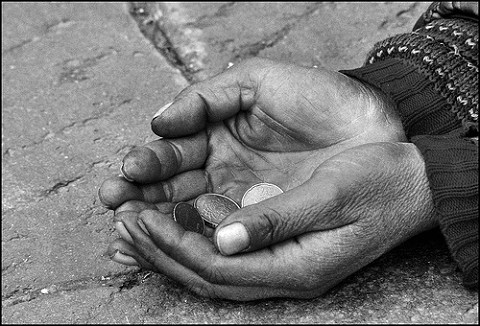
Here I think of an unkindness that I am guilty of now and then when someone approaches to ask for money. I often give money to people but can be very impatient with the demand itself. I don't want to hear the reasons or the rationale, I want them to take the fiver and let me return to my monadic bubble (with earbuds). Surely this is negative incomprehension, in Cixous' terms. 

But there is another model for how we respond to the shock of the other, what she calls positive incomprehension

She gets at this way of responding to the other via love and friendship, and they make a natural fit I think. Difference being what stimulates friendship and love (though this stimulus may not always be unerringly a boon to either relation). Also, while it is not the aspect that I wish to bring into my writing practice, I am interested in the moment where, in looking at the other at a certain point we do not see, this being where the unknown begins. With her invocation of the "secret other, the other secret, the other itself. The other that the other does not know." That is, there is an insight in this passage which I at least feel. I've friends and even acquaintances who I think I know and then see in this way, and I have certainly learned that what I see is not something that should be simply given away, not even to the other in question. To do so is perilous. & so much as she writes I do not touch it; I leave it intact. Where I perhaps differ is that I do not always feel this as love, even as love may be a part of it. Compassion perhaps?

Cixous gets to the phrases that most excite me relative to my own projects of the moment in the second paragraph when she speaks of a not seeing because we do not have the means to know any further. Here then is a recasting of that passage as a means of prospecting for the sort of writing I am seeking…

To write in excess of Knowledge is to arrive at the point where the immense foreign territory of the other begins. The immensity, the reach, the richness of it, this attracts us — we then begin to create, produce, generate… (waste) meaning. This meaning one makes is not the discovery of the other, it remains undiscovered country. We do not know what the other is. The other is vast and far off. At the end of the lengthy path of our attention, of our reception, there is no 'end' but only a continuing into what gradually becomes the opposite of comprehension. Meaning not knowing. Meaning: not knowing.

______________Source

Hélène Cixous and Mireille Calle-Gruber
Rootprints: Memory and life writing
trans. Eric Prenowitz
Routledge 1997

March 25, 2013

Always Free Associate!

If Robert Frost is a poet, I don't want to be a poet.              ~David Antin
I've written now and then, here and elsewhere about my extant and emerging issues with scholarly writing. Sometimes I approach these issues through Lacan's discussion of the "discourse of the university," at other times in other modes of critique, or (in disregard of my New Years Resolution) complaint. Antin's quote above is but a piece of a longer statement where he also refuses poetry on the model of Robert Lowell, but opines that "If Socrates was a poet, I'll think about it." Involved in his rejection of Frost here is a poetic that wants more than to provide the moral commentary that one finds — everywhere — in Frost. & it is also not a poetic that aspires to platonism, but one that is engaged in the process of thinking, a thinking as talking, or as writing. A poetic that does not present its findings so much as its search — one where findings might be found, but who knows. Let this poetry-inflected opening color what follows, a collection of observations or quotes or thoughts which all seem to lead toward this other way of writing that I am seeking. 

Here is Mari Ruti talking about her sense of the conflict between the writing she aspires to and that which is demanded, a conflict between "professionalization and inspiration," which is bedeviled within the academy in that "we wish to advance knowledge, yet we simultaneously seek to ensure that this 'advancement' takes place according to relatively narrow rules and regulations that govern each discipline". This accounts in her view for the contrast, so often marked, between the American and French styles, where the former are characterized by "meticulous research, exegesis, criticism" and the latter by "confident and far-reaching theories, hypotheses, and lines of questioning" what she characterizes as a "propositional mode" (23). & Ruti is alive to the problem this clash of demands has, particularly on younger scholars — "One of the most frustrating dilemmas of academic work is that it seems commonly acknowledged that the most groundbreaking inquiries often challenge disciplinary boundaries, yet professionalization has made it more and more difficult to engage in such inquiries" (24). 
Rather than building up meaning, the analytic method breaks it down. ~ Tim Dean
To give a global interpretation, one which says this-is-what-it's-all-about, is what "building up" means above, the "analytic method" (i.e., free association) is what "breaks [meaning] down". These terms, up and down, are merely convenient. I could as easily claim that free association, by its productivity, builds up meaning and that the what-it's-all-about interpretation breaks it down, reducing it to a sound byte, to the moral of the story. Free association aligns with productivity, with the generation of more, and thus with excess… excess as a value. 

Dean's line appears as a gloss on Laplanche (who is turn writing about Freud) and the larger context is useful for me here, so;

"Laplanche shows how the original edition of [The Interpretation of Dreams] broke with hermeneutics by outlining a method that refused all syntheses of meaning. It was only in later editions (published after 1900), he suggests, that hermeneutical codes of symbolism and typicality were added to the text, in its burgeoning footnotes, addenda, and interpolations. Laplanche connects this eclipsing of Freud's original insights — by Freud himself" (38). The linchpin of this break with hermeneutics is free association… "the method of free association breaks things down, dispersing attention in multiple, often contradictory directions. The free associative method represents Freud's greatest discovery (…) because it is a method correlative to its object — the unconscious. Laplanche is fascinated by those passages (…) where for pages and pages Freud laboriously traces the associations of discrete components of a single brief dream (such as the famous dream of Irma's injection), without ever gathering together these associations into a final meaning or interpretation. It is Freud's reluctance to specify one-to-one - correspondences — his refusal to say: 'the dream means X' — that permits Laplanche to argue that the associative method represents a break with hermeneutics. Rather than building up meaning, the analytic method breaks it down" (38).

There is much in what Laplanche has to say about Freud that is interesting too and I'll need to go and read him more carefully, but what I am intrigued by here is simply this break with hermeneutics, with a method that "breaks things down, dispersing attention in multiple, often contradictory directions" and with excessive tracing of associations to any and every discrete component "without ever gathering together these associations into a final meaning or interpretation." & here again Ruti has something to add as in her book she seeks "to take the notion of narrativization in a different direction and to align it with psychoanalytic practices of free association and narrative self-constitution which, while granting meaning to the subject, do not aspire to any degree of self-mastery" (10). I am less concerned with narrativization as such than with the generation of meaning and the eschewal of mastery in so doing.

I've used the word excess a couple of times already and so let me also stress the emerging connection therein to Bataille whose notion of expenditure as waste in what he calls a "general economy" (opposed to the "restricted economy" of narrowly utilitarian ends) also appeals to me, even as I am so newly introduced to the idea that I am uncertain yet about how it might affect my desires as stated above. But Bataille's vision of so much of what we might otherwise think of as productivity, or the products thereof, he recodes as waste or excess. So where he writes of potlatch ceremonies and the willful destruction of goods I find myself thinking of the essay that I have been attempting to write about Nina Arsenault since I returned from seeing her OPHELIA/MACHINE show in December. The reason that association is so assertive for me is that the draft of this essay "about" Nina has been written, and deleted, written again and deleted again, something like a dozen times now. It was once over 40 pages in length only to be cut down to a few paragraphs. What is all that labor but sheer waste in Bataille's sense of the term? None of those lost drafts is any longer extant and none of them can be used, can serve any significant utilitarian end. 


Here, as if in illustration of my point, Nina is present but unclear
hidden behind string or lines (of description) and words on paper
which being somewhat clear are so, only by making her a blur.
Precisely the scenario I hope to avoid in the writing to be done.
In fact, Nina (by which I mean both her work and her person) is an exemplary case for the sort of writing that I aspire to do for the very reason that I cannot even pretend to explain her work to anyone. It's challenge and complexity make me painfully cognizant that any "building up" of meaning, or offering of a "global interpretation" of some work of hers will falsify it, reducing it to the limitations of my explanation. In a sense, though I was already struggling not to write of her show under the compulsion of hermeneutic interpretation, many of the blanket deletions that I made of such struggled-over writing was due to recognition that even at the scale of description, that the words we choose imply certain trajectories of meaning, and thus certain narratives and assumptions and again and again, I found these lacking, as not up to the challenge of writing about Nina in a way that does not reduce her.

It is thus in light of these varied ideas; of a prospective writing that is unafraid to offer far-reaching hypotheses; of a freely associative writing that that is not delivering an interpretation that wraps its object up in paper and bow, but one that loses itself in them, letting them send it wherever; a writing that embraces excess and the "breaking down"— which is to say the proliferation — of meanings rather than their reduction to the answer-to-all-questions. What then would such a writing be like? Where would it start, how would it progress, how would it (and could it) ever end? How might it be received in an academic space where the global interpretation, even if obviously inadequate, is given more props than a reading which stresses the inadequacy of such? How will it answer to the demands of utility (given that I wish it to be counted as a dissertation after all) and to the questions of readers, such as the pedestrian but unavoidable "What's it about?" 
Wait, is this an ironic comment or somehow illustrative?

My thought, in the last day or so is that I might model a mode of writing on Freud's repeated traces of associations and that just as in analysis, such chains of association are interrupted or link up suddenly with other clusters of ideas and so on… that I would allow this too. With such a model for how the writing would emerge, I would then simply keep writing, finding the links between all the areas that I wish to write about and when the link goes there, so do I. The link has the precise looseness that it has for my own unconscious or for Monty Pythons' Flying Circus. The link need not be judged as such, simply followed. Given this, might the dissertation unfold in whatever fashion so long as it links the many clusters of interest that I have in a way that is revealing of connections, allows for the making of arguments, and does much of the same work as a more predictable text but without the lock-step aspects and need to demolish all counter positions along the way? That is, I am attracted to the non-utility of Bataille's economy and yet, I am not averse to certain ends being reached.

Here then are some clusters of thought (I am leaving many aside for the moment) — sometimes discrete ideas, other times specific cases/arguments that I could flesh out in a pinch or perhaps just stuff I want to talk about. 
This lattice is not a very adequate map of the totality, and it even neglects some obvious connections
that should be made here, but one could read it as a map of a single attempt to talk my way through
the topics here and thus as something which could have been connected otherwise any other time
I made such an attempt.

__________Sources 

Dean, Tim
"Art as Symptom: Žižek and the Ethics of Psychoanalytic Criticism"
Diacritics (Nov 2002) 32:2 (21-41)

Ruti, Mari
Reinventing the Soul; Posthumanist Theory and Psychic Life
Other Press 2006

April 11, 2012

Quadripodal Musings


Displacer Beast!
I am still hoping to find some kind of generative poetic that will let me work with theory differently than I have largely had to up until now. I know that the dissertation will have to explain things and exemplify things - but I'm maybe reacting to the imposed telos of it all. Is there no way to demonstrate knowledge other than the University Discourse? What would any of these be like as the upper line of a quadripode of Lacan's discourse theory.
Yes, I said quadripode.
Aloud, while I was typing it.
 Here is the graph of the positions…

So then, here are the two other upper lines I alluded to before we stumbled over quadripode (quadripode oh quadripode…) I would like to nominate for consideration (meaning someone out there explain them to me!)…

→ S1
→ S2

In each the agent is object petit a.  Discourse issues from the cause or object of desire in each case. The first addresses an other as Master and the second addresses an other as Knowledge.   

object a as agent seems to me to always be the tough one to think on par with the others. It is easy as pie to imagine individual statements of arguments as being delivered in the discourses of the Hysteric, Master, University. But the Analysts does really say that much to begin with, and it is always as if what they say is coming back at you from things you've already said. anyway. 

That is to say, I can imagine - in a somewhat Marx Brothers fashion, ordering a meal in a restaurant in the mode of those other three discourses. ...But how would the analyst order anything if we understand their discourse as situated in the analytic session? 
Waiter: Do you want to start with drinks?
Star..? (the waiter had dropped the 't' at the end of "start", though it could have been a accent thing, after all, they've just met)
Waiter: I can take the food order then if you're ready.
Waiter: I'll give you a few minutes. (muttering 'nutcase' as he heads for the kitchen)
Whether any meal could in fact ever be ordered is unclear, perhaps the hopefulness of the waiter who is under pressure to sell tonight's special might leak out somehow, get repeated and appear to satisfy the wish i.e., be heard an order. Though the difficulty would repeat with the side dish and salad dressing.

But, it would seem to me (and I argued this with a literary example elsewhere) that what is different in the analyst's use of the discourse of the "analyst" discourse is a very restrained, even refused relationship to the sort of 'agency' that is exerted by the S1, S2 and $ in their respective turns in the agent's position. To point to one very easy difference…

If one attempts to intervene in discussions or to interpret, in the analytic sense of that term - echoes slips of the tongue and mis-speech of any sort, refusing to gratify questions with answers or attention, interrupting now and then with utterances that are annoyingly neither clearly questions or answers, etc etc what, in my experience happens is, people get angry or annoyed, or they just treat you like you're maybe on meds or something and give glassy smiles back your way. Now one could complain that I am grossly underestimating what analytic technique is all about etc - fair enough. I'd still argue that no counter argument is really allowed - analysis is purported to work whether I as analysand know doodley squat about the theory - ergo, first impressions are not something that could be shrugged off, rather they would be aspects of the interaction for the analyst to interpret. Just saying that if the above first impressions may be overly negative, there is enough there I think to nonetheless mark the trends in the analysts discourse that work at odds to most social styles of discussion and interaction that we are involved within. 

What none of the other discourses seem to have is an ethic. As such, if we think of the discourse formerly called the Analyst's as being without any ethic, then what might it better be called…? Maybe the Discourse of the Pervert? (I'm not the first to have noted that the top line of the discourse also resembles the formula for perversion a <> $ ).

There is much more to say but I'm just staring at these and spinning lines ...

→ S1
→ S2


March 31, 2012

Are we pathologizing yet? Lacan's structures of desire: Neurosis, Perversion, Psychosis


I know that this is going to be an issue I'll be forced to navigate, probably more than once, as I'm hoping I'll be able to argue the case that psychoanalysis, specifically Lacanian articulations of it, have something useful to offer for thinking about trans subjectivity and embodiment (and about human subjectivity and embodiment more generally). That larger argument is likely not to take on much shape for some months to come, and may take years.      Who knows? 

Talkin' about my d-d-d-dissertation. 

But, given the justifiable intensity of negative responses on the part of trans people to the pathologizing discourses of psychiatry, medicine, and yes, that highly suspect brand of "psychoanalysis" which has become part of the ideological psychiatric state apparatus,.. psychodiagnostics might well be a hard sell. My basic contentions in regard to the psychic situation of trans people feel to me like they ought be utterly noncontroversial, even banal. Here are two of them (maybe all of them, actually);

* There is absolutely nothing inherently "dysfunctional" or "pathological" about being a trans person. Which is not to say that a trans person can't be bat shit crazy, just as, in principle, anybody can be bat shit crazy (I'm thinking of a GSU prof in the music department for example). 

* Psychoanalysts who would wish to claim that all trans people conform to any specific structure of desire (neurosis, perversion, psychosis) are being very bad analysts. Just as not every person with bleach blond hair is going to be "conservative", nor is every person with a hairlip going to be "shy" nor is everyone who has had braces going to be "promiscuous". Every person's inhabitation of a structure of desire will be unique, even if those structures qua structures are of a somewhat limited number (neurosis, perversion, psychosis - with the subtypes; hysteria, obsession, paranoia…. sometimes phobia, sort of). I would argue that, if anyone, claiming to speak with analytic authority (already a dubious notion) insists that all of any possible demographic set of people are going to share a single configuration with regard to their desire, that this cannot be anything other than an imaginarization of that "analyst", an elaboration of their own fantasmatic investments in their object of study (those folks they are charged with helping). Certainly these same analysts would be up in arms about my failure to appreciate the uniqueness and specificity of each subject were I to suggest that all heterosexuals or all men were perverts, psychotics or any one structure. 

Weirdly though (sadly, depressingly) there is lot of both of these things going on in the psychoanalytic lit on trans, giving the banalities stated above something of a radical character. Weird, huh? (not that there are any psychoanalysts listening) The commonest reference points are psychosis and hysteria, but I have also seen perversion and phobia suggested. The very plurality of these claims ought to raise some suspicions even before evaluating them. Applied as such, this very much deserves the name of pathologization and it is against the spirit of psychoanalytic thought as I understand it, in that psychoanalysis is not an agent of normalization. If it is used as such, it becomes something else, something other than psychoanalysis (for me at least, we can argue it elsewhere).

But this is where it also gets complicated and fraught for a number of reasons and reasons which ought not be swept under the rug. 

Before thinking about what might be problematic about the following psychodiagnostic categories, I'm going to try to give a brief overview of what I take the Lacanian position about structures of desire to be.  I'll be speaking out of the bag here, not running about like a good grad student and looking for other people who have said similar things to convince you that I am not wrong. How bout you decide?

The different structures of desire are all responses to the impossibility, once we have become speaking beings, of signification ever equalling being. Or we might think of this as a response to language's inability to capture being. There are thus three basic responses to this impossibility and the discomfort/suffering, etc that it imposes. We can deny it and construct any number of fantasies which resituate it not as forever lost (as it is) but as having been stolen, or mislaid, or forbidden or whatever. That would be the neurotic response. Or we can disavow that this happened, a sort of "I know it is lost but it isn't really lost" claim which allows that the subject can be the object, or control the object. This is the perverse response. Or, finally, one can foreclose. That is, one can rule out in advance that there could ever be any signification or even recognition of the loss of being that language entails. The response, in essence, forecloses the Symbolic by means of reducing it to the Imaginary. This is the psychotic response. 

While Freud and certain other analysts have speculated or even insisted that analysis is irrelevant to those with a perverse or psychotic structure, Lacan disagrees. At issue is simply that 99% of what we think of as analytic technique is actually more accurately described as "the technique of the clinic of neurosis". I saw it suggested that to proceed with a psychotic's analysis as if they were a neurotic could in fact be actively detrimental to them. 

Now, a few more points to remember when thinking about psychodiagnostics and lacanian nosological categories.

1. For Lacan there is no "normal" space to occupy. In fact normality as a concept, reference point or standard is absent from Lacan's theory.

2. To be a subject of desire is not a "pathology" because there is no normal against which one would have to judge to say that this or that sort of desiring structure was a deviation and hence, pathological.

3. To be a neurotic does not require that incessant and endless doubts a la Woody Allen (but without the humor) be manifested at the level of someone's everyday behavior. To be a pervert does not require that this subject have anything at all to do with fetishism or any of the sexual practices that we mark as perverse in the vernacular. To be a psychotic does not require that this subject is a raving looney, speaking in nothing but inscrutable babble and unable to make use of logic or reasoning, ever. 
No, the donut is not a fetish.
i. Neurosis is said to be the most common structure. It's central anxiety, that which it doubts most, appears in the form of a question and this question is said to vary whether one is hysteric or obsessional. The hysteric wonders "am I a man or a woman?" and desires to know just what being this or that means (thus we see the denial I mentioned above, the neurotic persists in denying that being can be captured in words). The obsessional asks "am I alive or am I dead?" which is again a question which demands that life (read: being) be given a definitive meaning (i.e., made dead, like the letter)
ii. Perversion is marked by a kind of certainty (of course it isn't, but IT IS nonetheless) and this certainty is about the object. The pervert knows that they are the object of the Other's jouissance. Cops, judges, military - these are prime perverse life paths as they afford endless opportunities to be the instrument of the big Other's (largely painfully exacted) enjoyment. "Of course I know that I am not the agent of the Other's jouissance, but feel how much the Other enjoys when I punish the lawbreakers!"
Hi, I'm feeling both ordinary
& a wee bit psychotic
iii. Psychosis too has a sort of certainty involved, though it is different in character I think. To play it out in an impossible monologue, we might imagine it like this; "No object can be lost." But when we speak of psychosis as well as the word "psychotic," in the popular mind, this means raving psychopath or serial killer or some such thing. This is not what it means to Lacan. I've long wondered about the psychic state of the psychotic who has not had a dramatic "psychotic break". I understand that J-A.Miller and perhaps others have written some about this under the heading "ordinary psychosis" but I have not read any of this work. Suffice to say that most psychotic subjects are not in a psychotic break at all times, rather contingent factors in their may lives provoke such an event by undermining the master signifiers that allow psychotic subjects to operate in the social world. I see no way to sustain an argument about whether or not most psychotic subjects will or will not ever have a psychotic break during their lifetimes, but my ungrounded hunch is that a great many never do and probably have as good a chance as any other sort of subject of being a "productive member of society"  (or whatever)

4. No structure is immune to being shaken. The psychotic break is surely dramatic (at least in one's imagination, if not always in "reality") but neurotics have break-downs and perverts undoubtedly as well. Likewise the implicit or explicit valuations that one now and then hears applied to one or another structure - hysteria, perversion and, via Deleuze and Guatarri "schizophrenia" (as a brand of psychosis) - which then get championed as somehow exceptional and radical and the path toward the future. I call bunk on all that. It's divisive, potentially abjecting, and simply wrong. It is not unlike the reverse image of the blanket claim that all trans people are ______…. just as ill-founded and just as un-psychoanalytic. A psychotic break is serious business, no doubt, and that it has such marked effects on language is fascinating as well. I do not know as much about psychosis as I would like, but I strongly suspect that the world has known serial killers and sociopaths who were neurotic or perverse.

5. Who is psychodiagnostics for? Seriously. How would you answer that? Here is who it is not for: the analysand. If in your analysis you and your analyst are going round and round about whether you are an hysteric or an obsessional you are not having an analysis, you are aiding in your own pathologization or you're engaged perhaps in some bassakward sort of analytic game. Psychodiagnostics is a guide for the analyst. But in principle, every analysis must have the potential to reconfigure what we understand of the theory. Psychodiagnostics in that perspective would then be a way for them to assess, as best they can, which structure this analysand might be and to adjust their clinical method accordingly, because, as noted above, simply applying the clinical methods of the clinic of neurosis to perverse or psychotic subjects would likely be ineffective (with the perverse) or even detrimental (for psychotics). Given this, when looking to psychoanalysis to help one think through one's dreams or to try to understand others or to provide a gloss on film, it pays to be much more circumspect that most (non-clinical?) Lacanians are wont to be. If a good analyst does not ever tell an analysand You Are This (hysteric, obsessional, perverse, psychotic)!  I would suggest that even if one is not an analyst that a similar restraint and attendance to the unique specifics of oneself, others, or cultural texts guided by, but never ruled through psychoanalytic theory, is actually more psychoanalytic than the reverse would be.

Now, I've kinda shot my wad already - but I promised to consider these nosological categories critically as well, so here goes…

Each of these terms is fraught with difficulties, some internal to psychoanalysis and many external. Hysteria evokes centuries of pathologizing of women and indeed is tied quite firmly - even in Lacan - to feminine subjects, even if those terms, for Lacan, do not denote the same things they do for others - but this is much of the problem! too many competeing claims on a term. Perversion is heavily overdetermined in a whips and chains direction in the popular mind, but from what I understand about the BDSM scene - specifically of ideas like the 'safe word' or the practice of having a contract about the activities to come (pun?) would incline me to suspect that the majority of the folks engaged in such activities are not perverts at all. If the perverse subject acts as the instrument of the big Other's enjoyment, no contract with a mere so-n-so sort of other, or 'safe word' will place a limit on the jouissance of the Other. In fact the very offering up of oneself for "punishment" might negate the potential of it taking place if the other subject is truly perverse. & as noted, psychosis collocates with sociopath and psychopath and serial killer and lunatic and it is nearly unimaginable that a notion like that of "ordinary psychosis" will counter the gravitational push and pull of the established social meanings.

At issue, perhaps, is whether one wishes to talk psychoanalysis only with insiders, or whether one might wish to be able to bring psychoanalysis to those who know none of the terminology and who thus are NOT going to hear these terms as meant by Lacan without an enormous amount of groundwork being laid. Groundwork that will need to be laid again and again with each new person. (& if you think these are thorny issues, wait until you ponder sexuation and Lacan's understanding of the words Man, Woman, Masculine, and Feminine - and prepare for a bit of mind fuck if they are new to you).

Is there any solution to this? 

One could simply foreclose psychoanalysis I guess.

One could attempt to clarify the structure, dynamics and functioning of these terms and propose other ways to name them. This looks like the best strategy to me, but it is not an easy road either. 

If this woman can get a snake to drink
milk out of a straw, surely I can convince
someone to give psychoanalysis
another hearing...
& here is another wrinkle, at a tangent from the above. Per Lacan, once we adopt a structure as the basic template for our desirous relations, we are stuck there. So, once a perv, always a perv. But I find myself wondering about that. That is, for some time I entertained the idea that the psychotic break might very well be visited on anyone, and that it would at that moment impose a psychotic structure upon what had been a neurotic or perverse subject. I say this due to personal experience to a degree, when something heavily invested falls, when that S1 is undermined and no longer ties anything down... these moments can be harrowing, the values of all things seem suspended. Then, what are to we to make of the claim - relevant to the clinic of neurosis - that the analysand must becomes hystericized? If, said of an hysteric analysand, what does this mean exactly? & if said of an obsessional, ditto. (I think that this refers not to structure but to discourse, per seminar xvii, but I might be wrong). & then what about perverse enjoyment, that is when we enjoy seeing someone being subjected to the law "they got what they deserved!"… does this implicate the subject in a perverse structure in any way or not, perhaps because it is not that enjoying subject who imposes the law upon the transgressor?  Or, more succinctly - how do we know that subjects are forever tied to one and only one structure? What havoc would it play with the theory if we proposed that subjects - in certain very specific situations - might move from one structure to another? Would this be a useful flexibility or a monkey wrench into the clinical theory?

Done.                   (dang, close to 2,500 words)

Could I talk my dissertation into being?


I heard last night of a professor that I know who had planned to write a dissertation with a model like this:
Theoretical chunk
3-4 chapters using the theory to read Lit
Conclusion
… but then… clarifying the theory bit and answering to questions put to him about that turned it into the dissertation. 
… I heard two others remark, bemusedly, that their dissertations were Five Paragraph Expository Essays writ large, structurally speaking. 
… "You can never explain too much" another said. 

Then I made various raunchy insinuations about footnotes, none of which are pertinent here.

But somehow, I want to do all the shit that they tell you not to do. 
Think of it as a book not a diss.
Structure it in a more complex way, such that, perhaps, it has something of a method for its movement from idea to idea, or, going further into poetics, it makes use of prompts, is constructed off the page as a series of improvisations and then transcrib-o-formed into something which captures part of my speech patterns as certain poems have done. (that last act connects to many things i have thought about voice, see below).

Could a text be structured topologically? what the fuck does that mean? 

Could I, in significant part (if not all or most) talk my dissertation into being?
. . . quasi Antin perhaps, but I'd have something of a course plotted, a lattice of ideas on a page that would be there to refer to, even the loosey goosey 'word cloud' would do the job.
I'd ask if my theory friends would like to start a salon, but wait - I've tried that. or it was a journal (still a good idea). 
                             video?          hello youtube? 

Can one do a dissertation refusing an endpoint, any specific goal and instead grow something until it feels done? (this is again garden variety assemblage/method poetics, but telos is hard to find here)
the Tractatus is a rather austere model - but I'm thinking of some principle of connection and collocation which would be used to assemble as many small and tightly contained 'chunks' )technical term for poets, you might not know it( these generated as needed to perform tasks, exemplification, context creation, linkage, concept creation, concept deployment, object analysis, image analysis, relational analysis (those last three - read them as real, imaginary, symbolic?) … various functions are determined to be needed here here and here, chunks which perform these functions are sorted into the places. Then if the chunks are quasi-transcriptions, tightened into ecrit...

Ok, so then… 

Way back when on the blog, I had this post wondering about dissertation stuff and I took a pot shot at what a trajectory through it might've involved. Here it be (note the implicit 5 para essay vibe as well):
Language Embodied / Embodied Language 
  • What psychoanalysis, Freud and Lacan preeminently, have to contribute to understanding the body's imbrication in language. 
  • Voice, a unique site of interface between the two, particularly at its more extreme points or edges - sound poetry, glossolalia, aphasias, psychosis as well as in modes which diminish the sense of subjective engagement as with routinized and depersonalized speech or parapraxes as discussed by Freud and others.
  • Voice as object.
  • Speech (parole) vs Langue, as well as Speech as semiosis (ala Peirce).
It seems to me that this offers at least the potential to allow for some discussion of art (if I limit to performance art or sound art that uses voice), film (obviously, though the devil will be in the details), fiction (this is less obvious, perhaps there are pioneering studies to be made of author's reading their work? the text-heavy and disembodied nature of most fiction is harder to envision in this daydream I am having), and, without any difficulty, poetry (the biggest challenge here perhaps being that I've tended to avoid writing about the stuff I love the most, not wanting to link it to the dynamics of the academic economy).
There is some of this that I still have a big pull toward. By tags; Body, Voice, Speech all with Psychoanalysis obviously. The ways that we can see, measure, otherwise discern or perhaps only posit upon the body itself the effects of language (as it is treated here) but ultimately the effects of the Symbolic and the Imaginary. The object voice - voice as objet a - as Real. Voice as unique intersection of language and body, voice in the three orders… that sort of thing. 

Hi, I'm Charles Peirce.
I don't get into it above but when I mention Peirce I was think about ways to use Peirce as an alternative vocabulary for discussing speech. That book call The Machinery of Talk by Anne Freadman - there was something I read in that that made me think of other ways than Saussure and Jakobson to talk about speech, still using the idea of the chain and of the automaton - but ditching the X Y axes of the formalist/structuralist style. 

Charles Peirce en femme
Google -> Image :
"charles peirce"
What I'm shying away from at present is certain ways of talking about language, and even more of using the various awkward or technical argots of the many regional discourses or disciplines that already have their own distinctly regional investments in language as the pre-eminent object of interest, or that through which all else must be filtered, or both. That is, a definite demoting of language as the privileged prism through which to grok everything else. It has its place, but maybe it's a place best thought of as but one ring out of a borromean chain (minimum is three rings, but in principle there is no limit to how many rings).

What has changed is the routes taken toward the body. 

I spent some months reading things about brains. Neuroplasticity. There are posts here, look if you care. & I lined up some books by the neuropsychoanalytic folks really and truly intending to read them when I swerved into another territory and suddenly I was reading about sex and gender as lens on the body and then just for their own sakes, and then something tripped me into reading specifically about transgender issues - I think it was coming upon Please Select Your Gender (Patricia Gherovici) on Karnac's site and then getting it and that sent me deeper into trans stuff on the one hand and coincidentally Dean's Beyond Sexuality has a chapter on trans, and off I went on another book buying spree. & other stuff too, more than can be mentioned here etc.

Bzzzzzz Bzzzzzzz
Am still wondering about my pre-order that keeps getting delayed of that book by Adrian Johnston and Catherine Malabou which promises to be smart, psychoanalytic and all about brain stuff and neuroscience and philosophy and what not. 

So, not ruling out a bit of neuro/psycho-analytic input (broadly construed).

But it seems much more immediately of interest to think about what in a recent post, I called the trans effect, would be upon Lacanian psychoanalytic theory, specifically in so far as it addresses itself to the body and voice. 

& with regard to the readings of texts. I'm torn. I see the utility of that endeavor - at least relative to certain kinds of jobs - but then again, I have never had any real idea about what job I might get with what I do, and the whole poetry backdoor plan is also there and not forgotten. (Not that it is a golden parachute or any thing like that). But, wrt "readings" again, I'd much rather do 20 small ones, that were machines of exemplification or problematization of the theory - rather than being theoretical explications of the texts in question. (off the top of my head, I have the analysts discourse in Faulkner's The Hamlet, lots of things I could still do with Black Hole, there is Inland Empire to draw from I guess, my queer reading of Malina, could it not also be a trans reading to a small degree (is Ich, the woman "trapped inside the body" of Malina, a man?), I could do many things with Spicer possibly again working with lacanian discourses and or with Peirce, The Limits of Control and the desire of the Other?, & somewhere I do want to get pooperific - not just as a nod to Cal's interests either (tho, it will serve that purpose) but to work with abjection and thus to be able to highlight processes which produce abjection in others (like the Master's, but potentially other discourses as well) which is surely pertinent to trans people who are targeted rather mercilessly in precisely those ways. I could go on.

Echt!

If I did this tomorrow, would it sound like a different dissertation entirely? 


[things largely left out - Queer theory, Sexuation/Sexual Difference vs Gender / Sex, Ideology Critique, ...oops]